

Systemic Team Coaching
From a team of leaders to a leadership team.
Coaching for leadership teams and functional teams as a whole: their purpose, their stakeholders and how they work together, so the team creates more value than the sum of its members.
The gap
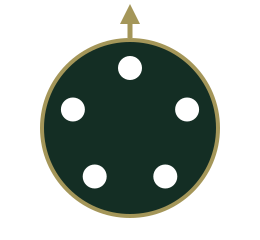
Many leadership teams are a group of people who meet regularly, each responsible for their own function, region or area: a team of leaders rather than a leadership team.
The shift that matters is to a team that collectively owns the whole of what it needs to achieve, not just the sum of its individual roles, and creates more value together than its members could apart.
Systemic team coaching works on that shift: the team's purpose, how its members work together, and how the team engages the people it serves.
A team of leaders
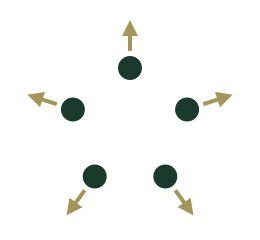
A leadership team
The Five Disciplines
Our team coaching is based on Peter Hawkins' Five Disciplines model of systemic team coaching. Each discipline covers a different part of what an effective team needs to get right. Most teams are strong in one or two and less developed in the others, so the coaching starts by finding out which need the most work.
-
Commissioning
Being clear what the team is there to deliver, and for whom
-
Clarifying
The team's shared purpose, goals, objectives and roles
-
Co-creating
How the team works together: relationships, dynamics and culture
-
Connecting
How the team engages its key stakeholders
-
Core learning
How the team reflects, learns and keeps developing
Based on the Five Disciplines model in Hawkins, P. (2026) Leadership Team Coaching, 5th edn. London: Kogan Page.
Four steps, over three to nine months
-
Step 1
A first conversation
With the team leader, to understand the team's situation, whether we can help, and who to involve.
-
Step 2
Inquiry
Questionnaires, and conversations with team members and key stakeholders. The team then looks at what they show, and the coaching journey is designed from there.
-
Step 3
The coaching journey
A plan of team sessions, which may include coaching the team in its normal meetings, and regular check-ins with the team leader.
-
Step 4
Handover
A structured wind-down rather than an abrupt end, so what has been built stays with the team.
The Team Charter
A charter the team writes and owns. It sets out what the team is there to do and how it will do it: its purpose and mandate, its strategic focus, its key stakeholders, its objectives and measures of success, and the working agreements its members commit to.
Because the whole team builds it, the charter becomes a reference the team uses in its normal meetings, and a way to bring new members in.
Team Charter
Written and owned by the team
Purpose and mandate
Strategic focus
Key stakeholders
Objectives and measures
Working agreements
Training and first-hand experience
Individual coaching develops the people in a team. Systemic team coaching develops the team itself: how its members work together, and how the team works with the people around it.
Team coaching at Winnocks combines training in systemic team coaching with first-hand experience as senior executives in leadership teams, and as executive and non-executive board members. That experience means understanding the pressures on a leadership team from having been in one.
-
Trained
In systemic team coaching
-
Leadership teams
Senior executive experience inside leadership teams
-
Boards
Executive and non-executive board experience
Leadership teams and functional teams
Leadership teams who want to work as more than the sum of their parts, and functional teams that want to get more value from working together than they do now.
Every engagement starts with a conversation
Around 30 minutes with the team leader, to understand the team's situation and whether we can help.